
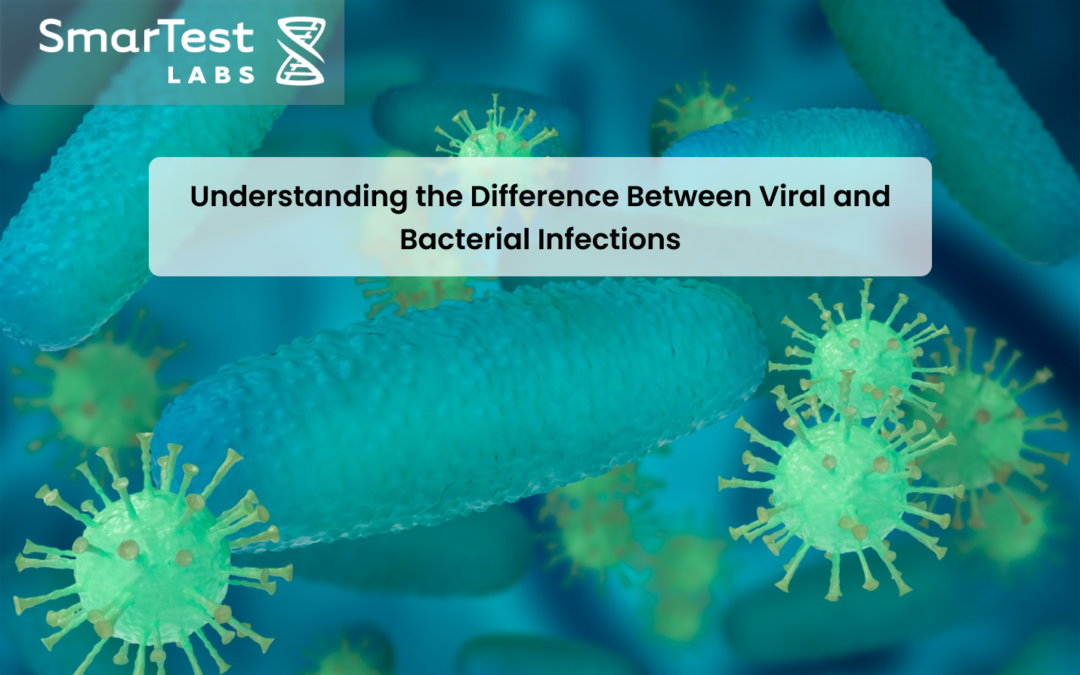
Understanding the Difference Between Viral and Bacterial Infections
Introduction
If a person has a fever or a sore throat, what could potentially cause this in the person. These could be caused by a virus or a bacterial infection. Bacteria cause bacterial infections and virus infections are caused by a virus. These are different kinds of infections. Antibiotic medicines can help treat bacterial infections but not viral infections. There are antiviral medications that can help clear some viral infections.
To find out what exactly has caused an infection, providers may order blood tests, urine tests and other relevant tests to determine cause of the symptoms.
What Is the Difference Between Viral and Bacterial Infections?
Since viral and bacterial infections are caused by different pathogens, it is important to distinguish between the two.
Bacteria
Bacteria are caused by a single-celled microorganism. Bacteria can live in the human body and cause symptoms. Other bacteria can reside in the human body and do not cause any symptoms and could be beneficial to the human body.
Bacteria that cause diseases like tuberculosis, strep throat, tetanus are everywhere in the environment. They can be transmitted in the environment, contact with someone who is infected and food.
Antibiotics help treat bacteria and are effective in getting the bacteria under control. Antibiotics should be used as directed to avoid a person from getting resistant to the antibiotic. It is important to follow the dosage and administrative requirements as directed by your provider. This is especially important for individuals who are recovering from other diseases like cancer, transplants, are diabetic or planning for surgery.
Viruses
Viruses are small proteins that survive on a host. Viruses are made up of DNA and RNA surrounded by a protein. By attaching to a cell, they reproduce the virus that could cause cancer or other diseases. Viruses can attack the liver, lungs and blood.
Some common diseases caused by viruses are:
- COVID-19 caused by the coronavirus (SARS-CoV-2)
- HIV – immunodeficiency virus
- The common cold – can be caused by various viruses.
- Chickenpox – Caused by the varicella-zoster virus.
- Smallpox – caused by the variola virus
- Measles (Rubeola) – Caused by a variola virus
There are many anti-viral medications that can help treat a virus. The medication is used with a person’s immune system to treat a person who is infected. In the event an anti-viral medication becomes immune to a virus, it becomes difficult to treat the disease. Some examples like Herpes, HIV can become resistant to the anti-viral medication if treatment is not done early and quickly.
Diseases caused by viruses include:
- COVID-19, caused by a coronavirus called SARS-CoV-2.
- Chickenpox, caused by the varicella-zoster virus.
- HIV, caused by the human immunodeficiency virus.
- Common colds, caused by a range of viruses, but often by rhinoviruses.
Medicine that treats viral infections is called an antiviral. These medicines usually stop a virus from making copies of itself. They also may stop a virus from going into or leaving a cell.
Many antivirals are made to target the virus and not the host cell. For this reason, antiviral medicine often needs a person’s immune system to help clear out the infection. Some antiviral medicines focus on boosting parts of the host’s immune system.
More than 70 antiviral medicines are used to treat human illnesses, some with major effects. For example, after antiviral therapy was introduced to treat HIV infection, the rate of death dropped sharply.
Viruses have a natural ability to escape the control of antiviral medicine. But this resistance is more likely in people with weakened immune responses. A weakened immune response allows the virus to copy itself more often, for longer. That raises the chance that it will develop a resistance.
Viruses that become resistant to antivirals have affected treatment, including for genital herpes, HIV and, in 2008, for influenza (flu).
Treating and preventing bacterial and viral infections
In some cases, it can be hard to figure out if a bacterial infection or a viral infection is causing your symptoms. Both infections can cause the same diseases, such as pneumonia, meningitis and diarrhea. A careful review of your symptoms and lab tests can help your healthcare professional find the right treatment.
With any medicine, either an antibiotic or an antiviral, take it as directed. To prevent infections, get vaccinated for viral and bacterial illnesses on schedule.
Also follow these tips to prevent illness:
- Wash your hands with soap and water.
- Keep your hands away from the face.
- Stay away from people who are sick and avoid others if you are sick.
- Cover your coughs and sneezes.
- Learn how to identify an infection.
- Be aware of the bacteria pets can bring into your living area or get on your hands.
- Clean and disinfect items that you touch often.
- Follow food safety rules.
- Take steps to prevent sexually transmitted infections.
It can help to ask your provider about your risk of infection. Also ask about your risk of a more serious response to infection called sepsis.
Viral vs Bacterial Infection Symptoms
Bacterial and Viral diseases are caused by different microorganisms. Most bacteria can be harmless. Bacteria in the intestines for example can help with digestion and destroying diseases.
Virus and bacteria can be difficult to distinguish as symptoms can be similar. Your physician can normally diagnose it by obtaining a swab, blood draw or urine test.
The common symptoms between a viral infection and a bacterial infection are as follows:
- Coughing
- Sneezing
- Fever
- Diarrhea
- Lethargy
- Vomiting
The table below demonstrates some of the symptoms between a viral infection and a bacterial infection and how they could be treated.
| Symptom / Feature | Viral Infection | Bacterial Infection |
| Fever | · May occur
· Usually, a low-grade fever |
· Normally higher fever
· Fever is more persistent. |
| Cough | · Common with many respiratory viruses
· Runny nose, sneezing, scratchy throat and cough |
Can occur |
| Sore throat | Common | Can occur, including strep |
| Fatigue | Common | Can occur |
| Body aches | Common with some viruses | Can occur |
| Localized pain | · Normally occurs over the whole body
· Fatigue |
May occur depending on infection |
| Duration | · May improve on its own within 7 – 10 days. | · Depends on the virus
· With antibiotics it could clear in 1 – 2 weeks. |
| Treatment | Depends on virus | May require antibiotics |
How Can You Tell If an Infection Is Viral or Bacterial?
Since viral and bacterial infections sometimes have common symptoms, it is best to consult a provider for a diagnosis and treatment.
Some exceptions are the common cold that are not usually life threating.
Your provider will consider the following in diagnosing your symptoms:
- Your past medical history
- Physical examination
- Conducting a blood test or urine test
- Conducting a culture test to determine if it is a virus or bacteria
- At times a biopsy is done on the tissues that are impacted.
- For symptoms related to pneumonia, a scan may be requested to determine if there is damage to organs.
Can a Blood Test Tell If an Infection Is Viral or Bacterial?
It is important to distinguish between a viral infection and a bacterial infection to prescribe appropriate antibiotics. It has been found that careless antibiotics use has increased the resistance of bacteria to antibiotics. Amtibiotics must be used as prescribed and for the duration of the prescription for best results.
Viral and bacterial infection blood tests like Complete Blood Count (CBC) and C-reactive protein (CRP) helps determine symptoms and distinguish between a viral infection and a bacterial infection. These tests can provide insights into a person’s level of inflammation and immunity. CRP levels are normally more elevated in a bacterial infection as opposed to a viral infection.
Other tests that are more sensitive have been developed to distinguish between viral and bacterial infections. For example, a procalcitonin (PCT) test can show bacterial infections more clearly.
Recent developments in machine learning (ML) have advanced the possibility to quickly diagnose a virus versus bacteria. This helps providers administer treatment in a timelier manner hence containing the progression of the virus or bacteria in a person’s body.
What Blood Tests Are Used When an Infection Is Suspected?
Complete Blood Count (CBC)
A CBC test will indicate either a viral or bacterial infection. If a person’s white blood count is high is an indicator that the person could have a bacterial infection. On the hand a low white blood count as an indicator that a person could have a viral infection.
White Blood Cell Count
Although a person’s white blood is a good way to determine if the infection is a virus or bacteria, it is also important to understand a person’s medical history to determine if there are other causes creating symptoms. A provider is trained and skilled to examine, test and determine cause of an infection.
This test counts your body’s ability to count our cells that fight infections. High count of white blood cells is an indicator of a bacterial infection. Viral infections are seen when the white blood count is low.
Neutrophils
Neutrophiles is a type of white blood cell that that helps fight against bacterial infections. These cells work with other cells to create an environment that protects a person against infection.
These cells will migrate to the area of infection and break down the bacteria that is in a person’s body. It is the first line of defense to an infection.
Lymphocytes
Lymphocytes are a type of white blood cells. They help fight virus and bacterial infection. There are two types of Lymphocytes:
- T cells – These cells guard the immune system in a person’s body and attack any infections.
- B cells – These cells are responsible for antibody creation that protect a person from infections.
C-Reactive Protein (CRP)
CRP is a protein found in the liver helps with infection control. Providers use CRP tests to determine the level of inflammation in a person’s system.
The immune systems if infected sends out cytokines to address the infection. CRP levels indicate if a person has an infection or inflammation, Elevated CRP is an indicator that a person could have an inflammation due to a bacterial infection.
Providers use CRP to determine some of the following bacterial infections:
- Sepsis
- Inflammation of the bowels
- Arthritis
- Lupus
- Fungal infections
CRP tests are ordered when a person shows the following symptoms
- Fever
- Chills
- Rapid heart rate
- Nausea and Vomiting
What Does a CBC Show During a Viral or Bacterial Infection?
The Total White Blood Count is an indicator that shows if a person is immune to an infection.
The blood count for a viral and bacterial infection can be a quick indicator of a potential infection.
Bacterial Infection:
- The white blood cells show a higher level
- The neutrophils are higher due to the body trying to fight the infection
Viral infection:
- The white blood count is not really an indicator of a viral infection and stays normal, slightly elevated in some cases.
- Lymphocytes will show an increase as they are working to fight the virus.
CBC alone may not be the best indicator but an initial indicator that a person is infected or what type of infection a person might have. IN more severe bacterial infections, the white blood count is even more elevated. CBC acts as a first point of screening for an infection. It does not determine what the infection is. Due to this CBC results are often looked at in conjunction with a person’s clinical history, smoking habits, medications and other clinical conditions. To confirm a specific infection, it is best to get a culture or blood tests to determine exact condition.
Table to provide a high-level guidance on various indicators of an infection.
| Blood Test Marker | What It May Show | Important Note |
| WBC | Immune response | Can vary depending on infection |
| Neutrophils | May increase with many bacterial infections | Not diagnostic by itself |
| Lymphocytes | May show changes during viral infections | Patterns vary |
| CRP | Inflammation | Not specific to bacteria |
| Platelets | May change during some infections | Must be interpreted with other findings |
How Are Viral and Bacterial Infections Treated?
Treatments for a virus are different to that of a bacterial infection.
Viral – Viral infections are treated with specific medication; Antibiotics do not work for viral infections. For c=viruses that could be life threating an anti-viral medication may be prescribed. For lesser symptoms like the common cold, the symptoms can be treated with home remedies as it will pass after a couple of days.
Bacterial – Bacterial infections are treated with greater clinical attention. If your provider thinks you have a bacterial infection, he or she may request X-rays, blood tests, scans or MRI’s. These tests can provide a more targeted view of where the infection is and provide the proper antibiotics to manage the infection and cure the issue. Appropriate antibiotics must be administered for each infection as each infection requires different antibiotics to combat the pathogen.
Can a Viral Infection Turn Into a Bacterial Infection?
Viral infections do not become bacterial infections since they are caused by different microorganisms. The only way that a viral infection can become a bacterial infection is if there is a secondary infection caused by the virus.
Virus infections improve with time, but bacterial infections become worse with time. Both are treated clinically with different medications. Viral infections often resolve on their own with time whereas bacterial infections often need antibiotics treatment.
When Should You Get Tested for an Infection?
When Symptoms Are Severe or Worsening
If you have a viral infection and feel that it is becoming worse, there could be a secondary infection like pneumonia developing. See a provider and get the appropriate medical care.
When Fever Persists
If you have a fever that persists or recurs, it could be an indicator that you have a bacterial infection and need medical attention.
When a Healthcare Provider Suspects a Bacterial Infection
If a health care provider suspects a bacterial infection, the provider will determine the appropriate tests required to diagnose what exactly is the cause of the infection. Antibiotics vary and are administered through the clinical testing results.
What Happens During an Infection Blood Test?
Bacterial and virus infections can be tested using various methods. Testing is based on what your provider decides should be conducted.
Your provider may send body fluids or tissue samples to be tested. The test will show the presence or absence of antigens.
Diagnostic blood tests and cultures are used to find bacterial or fungal infections in a person’s blood stream.
Blood Culture – Looks for bacteria in a person’s blood. The procedure gathers the patient’s blood.
The results of the test are measured against a cut-off level depending on what infection is being tested. If the results are higher than the cut-off level or lower than a cut-off level, the provider will determine if an infection is in the person’s body. A positive results means the blood culture shows bacteria or virus. A negative result shows no sign of an infection.
How Is Infection Blood Testing Done at SmarTest Labs?
SmarTest Labs headquartered in Montgomery County and serving all the adjoining areas including WA DC, VA, Baltimore can assist you in making the right decision on required blood tests to check for infections. We provide on time services as mobile and onsite. As concierge laboratory our services excel in on time appointments and provide timely confidential results through a secure portal.
Our staff are trained to provide diagnostic blood tests. The results of the test can be explained to you by a health care provider.
Frequently Asked Questions
What is the difference between a viral and bacterial infection?
A viral infection is one that can occur for a few days and cure in a few days. A bacterial infection may need antibiotics as prescribed by your provider.
How can you tell if an infection is viral or bacterial?
A blood test, saliva test, stool test or sputum test, mucus test can help differentiate between a viral infection and a bacterial infection.
What blood test shows a bacterial infection?
Blood tests that can show a bacterial infection are blood cultures. Complete Blood count, C-Reactive Protein, blood markers and Lactic acid test.
What blood test shows a viral infection?
A viral infection can be determined by a CBC test, PCR test, Antigen test.
Can a CBC tell if an infection is viral or bacterial?
No, CBC alone cannot distinguish a viral from bacterial infection. CBC is an indicator that there is an infection. Other clinical symptoms must be used to confirm is the infection is viral or bacterial.
Does a high WBC count mean a bacterial infection?
White blood counts are a high indicator of a bacterial infection, but it is not mean that a person has a bacterial infection. There are other conditions that can cause the white blood count to be elevated.
Does CRP show whether an infection is viral or bacterial?
The CRP alone does not show a viral or bacterial infection. It is an indicator that there is an inflammation. Some viral infections like COVID-19 can show a viral infection that causes inflammation, there are other situations like surgeries, autoimmune diseases that can cause elevated inflammation.
Are antibiotics used for viral infections?
Antibiotics cannot be used for viral infections.
Can a viral infection become a bacterial infection?
A viral infection can cause a secondary infection like pneumonia.
How long do viral infections usually last?
Viral infection normally lasts a few days with a maximum of 1 – 2 weeks.
When should I get a blood test for an infection?
A blood test is used to definitively determine if an infection is bacterial or viral. It is important to do so if it is unclear what is causing the symptom. Appropriate treatment depends on cause of the symptoms.
Conclusion
- Viral and bacterial infections are caused by different types of microorganisms.
- Their symptoms can overlap, so symptoms alone may not reliably identify the cause.
- Blood tests such as CBC and CRP can provide useful information about the body’s response to illness, but they should not be treated as standalone proof of a viral or bacterial infection.
- Additional tests may be needed depending on the suspected infection.
- Antibiotics are used for bacterial infections when appropriate and do not treat viral infections.
- If symptoms are severe, persistent or worsening, readers should seek medical evaluation.
If you need laboratory testing to help evaluate an infection, SmarTest Labs can provide access to appropriate blood testing options. Your health care provide can aid in determining which test best fits your symptoms.
We can be contacted at:
Phone: 301-6886-8566
Email: contact@smartestlabs.com
Recent Comments